Bridging AI and Wireless Communication: The Role of NVIDIA Sionna in 6G Research
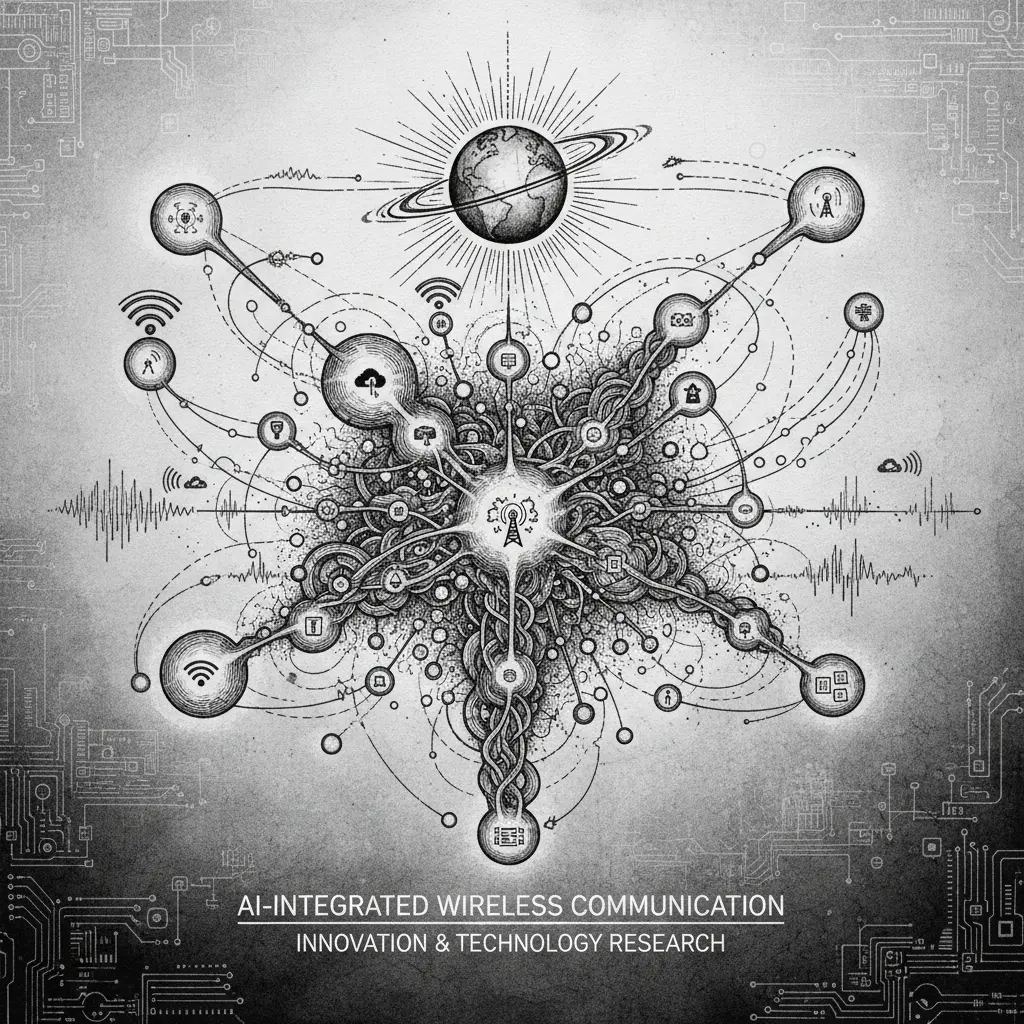
Wireless communication is evolving alongside growing interest in applying artificial intelligence to enhance system design. Researchers often use simulations to analyze wireless networks, though these models may not fully capture real-world complexities. This limitation can slow the progression from AI theory to practical wireless applications.
- Simulations in wireless research may overlook real-world factors affecting AI performance.
- NVIDIA’s Sionna framework merges AI models with wireless channel simulations powered by GPUs.
- Sionna enables exploration of AI methods for future 6G networks by connecting theoretical and practical aspects.
Challenges in Wireless Simulations
Simulations offer a cost-effective approach to testing wireless communication concepts without physical hardware. However, they often fall short in replicating environmental variations and signal behaviors found in actual deployments. As a result, AI methods that work well in simulations might encounter unforeseen challenges in real devices.
The Role of Open Tools in AI Research
Fields like machine learning have advanced through open-source software and accessible hardware, allowing experiments with real data. In contrast, wireless communication research has been slower to adopt such shared resources, which can restrict the pace at which AI innovations move from concept to application.
NVIDIA Sionna: Integrating AI and Wireless Simulation
NVIDIA’s Sionna research kit provides a software framework that combines AI models with wireless channel simulations. Utilizing NVIDIA GPUs, it supports flexible and efficient experimentation with AI-driven wireless systems. This integration enables researchers to assess AI techniques under more realistic wireless conditions.
Capabilities and Use Cases of Sionna
Sionna facilitates building AI models that learn from simulated wireless channel data, supporting studies relevant to emerging technologies such as 6G. The framework emphasizes speed and adaptability, allowing exploration of how AI interacts with complex wireless environments and protocols.
Impact on 6G Wireless Research
Future 6G networks are expected to involve complex signal processing and dynamic conditions, making AI tools integrated with wireless simulations valuable. Sionna offers a platform where AI methods can be tested alongside simulated wireless channels, aiding identification of approaches potentially suited for real 6G systems.
Bridging Simulation and Real-World Testing
Progress in AI-driven wireless communication relies on reducing the gap between simulations and physical experiments. NVIDIA’s Sionna framework supports this by linking AI research with detailed wireless channel models. This connection contributes to ongoing development of AI-native wireless systems for future networks.
Common pitfalls: Researchers may over-rely on simplified simulations that omit critical real-world factors, leading to AI models that underperform in practice. Limited access to open-source tools and hardware can slow experimental iterations. Without frameworks like Sionna, integrating AI with realistic wireless conditions can be challenging, hindering the evaluation of AI techniques for emerging technologies such as 6G.
Key terms
Wireless channel simulationA computational model that represents how wireless signals propagate and interact with the environment.
AI-native wireless systemsWireless communication systems designed to incorporate artificial intelligence techniques directly into their operation.
6GThe prospective sixth generation of wireless networks, expected to support advanced connectivity and signal processing.
GPUGraphics Processing Unit, a hardware component often used to accelerate AI computations and simulations.
Comments
Post a Comment