Enhancing AI Productivity: Overcoming GPU Management Challenges in Kubernetes with NVIDIA Run:AI on Azure
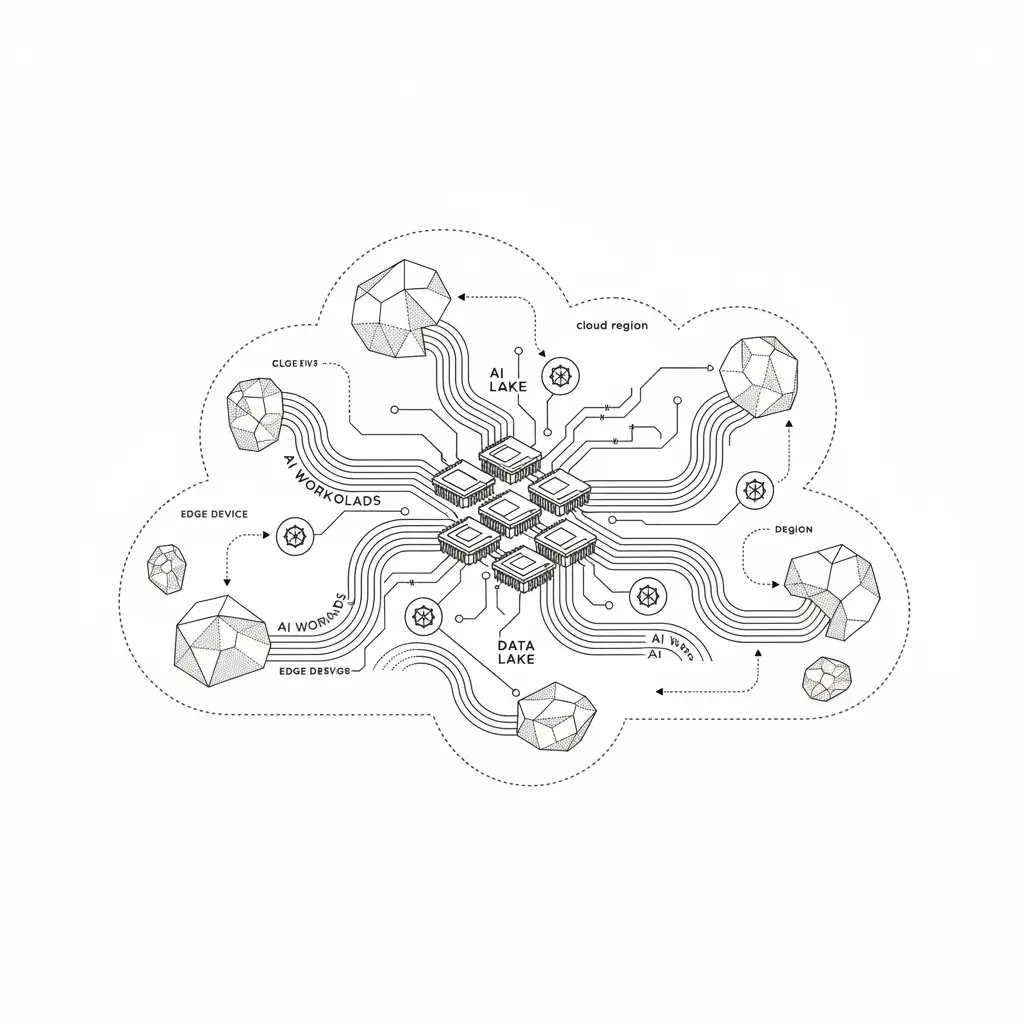
Managing GPU resources efficiently remains a challenge as AI workloads increase in scale and complexity. Kubernetes, widely used for container orchestration, has limited native support for GPUs, which can restrict flexible and effective GPU access for AI teams.
- Kubernetes’ native GPU capabilities are basic and lack features like dynamic scheduling and workload prioritization.
- NVIDIA Run:AI on Azure introduces dynamic GPU allocation, prioritization, and improved monitoring.
- The text says this method reduces GPU idle time and enhances throughput for AI workloads.
Limitations of Kubernetes’ Native GPU Support
Kubernetes was designed primarily for managing general compute resources rather than specialized hardware like GPUs. Its GPU support exposes GPUs as fixed resources without dynamic sharing or preemption, which can lead to underused GPUs and challenges in managing workload priorities.
Some of the main issues include:
- GPUs may remain idle if not efficiently assigned to workloads.
- High-priority AI tasks cannot easily preempt lower-priority ones.
- Limited GPU usage monitoring complicates resource planning and troubleshooting.
Need for Dynamic Scheduling in AI Workloads
Static GPU allocation often falls short for AI workloads that vary widely in size and urgency. Dynamic scheduling enables flexible GPU sharing and reassignment based on current demands, potentially improving throughput and minimizing idle hardware.
NVIDIA Run:AI Integration with Microsoft Azure
NVIDIA Run:AI adds a GPU scheduling layer tailored for AI workloads on Kubernetes, integrated with Microsoft Azure’s cloud platform. It addresses Kubernetes’ native limitations by providing:
- Dynamic GPU allocation: Flexible sharing and distribution of GPUs across simultaneous workloads.
- Workload prioritization and preemption: Ability to interrupt less critical tasks to free GPUs for urgent jobs.
- Enhanced monitoring: Detailed insights into GPU usage to support capacity management.
- Kubernetes compatibility: Integration with existing clusters without major infrastructure changes.
Effects on AI Productivity
Compared with traditional GPU management, NVIDIA Run:AI on Azure allows AI teams to execute more experiments concurrently and reduce GPU idle time. This supports faster iteration cycles and more efficient use of cloud resources, aligning infrastructure with AI development demands.
Considerations for AI Teams
Access to dynamic GPU scheduling can help researchers and engineers manage resources more effectively, scaling GPU availability as needed and prioritizing critical workloads. This approach may reduce infrastructure constraints and allow teams to focus more on model development.
Summary
Moving from static GPU allocation in Kubernetes to dynamic scheduling with NVIDIA Run:AI on Azure addresses key challenges in AI infrastructure management. This approach offers a path toward better GPU utilization and productivity for evolving AI workloads.
Comments
Post a Comment